
Yoga Exercises That Improve Stability Coordination and Physical Confidence

Physical confidence is built on a foundation of bodily control, poise, and spatial awareness. When you trust your body to move safely through space, react smoothly to unexpected trips, and maintain balance under pressure, your overall quality of life improves. However, modern lifestyles—characterized by long hours of sitting, limited movement variety, and chronic stress—frequently degrade neuromuscular coordination and core stability. Over time, weak stabilizing muscles and poor proprioception lead to physical hesitation, awkward movement mechanics, and an increased risk of falls or joint injuries.
Yoga offers an exceptionally effective, low-impact system for retraining the nervous system, building deep functional stability, and refining balance. Unlike rigid weightlifting exercises that operate primarily in single planes of motion, yoga postures require the continuous integration of core control, joint stabilization, respiratory timing, and visual focus. Mastering standing balances, dynamic transitions, and core-centric poses transforms physical mechanics, fostering genuine bodily confidence that translates directly into everyday activities.
The Neuromuscular Science of Stability and Coordination
Stability and coordination are not merely products of muscular strength; they are governed by complex communication loops between the brain, sensory organs, and musculoskeletal system.
-
Proprioception: The body’s subconscious ability to sense joint position, muscle tension, and movement speed in space without relying solely on visual feedback. Proprioceptors located in tendons, ligaments, and muscle spindles send constant signals to the brain to make micro-adjustments in posture.
-
Vestibular Function: The sensory system located within the inner ear that detects spatial orientation, motion, and gravity, working alongside visual cues to maintain balance.
-
Neuromuscular Efficiency: The ability of the central nervous system to recruit the correct muscle groups, in correct sequences, with precise force production to execute smooth physical movements.
Yoga poses deliberately challenge these systems by altering your base of support, shifting your center of gravity, and requiring steady visual focus. This persistent, gentle challenge forces the central nervous system to build new neural pathways, sharpening coordination and building instinctive stability.
Core-Centric Yoga Postures for Central Grounding
Every stable movement originates from a strong, engaged core. In yoga, core stability extends far beyond superficial abdominal muscles. It encompasses the deep pelvic floor, transverse abdominis, multifidus, and diaphragm, which together create a rigid cylinder of support around the spine and pelvis.
Plank Pose (Kumbhakasana)
Plank Pose builds foundational isometric strength throughout the entire anterior chain. Position your hands directly under your shoulders, spread your fingers wide, and press firmly into the floor. Extend your legs straight behind you, pressing back through your heels while pulling your belly button gently toward your spine. Maintain a straight line from the crown of your head to your heels, keeping your shoulder blades broad across your upper back.
Side Plank Pose (Vasisthasana)
Side Plank challenges lateral core stability, strengthening the obliques, gluteus medius, and shoulder girdle stabilizers. From a standard plank, shift your weight onto your right hand and turn onto the outer edge of your right foot. Stack your left foot directly on top of your right, and extend your left arm straight toward the ceiling. Engage your lower hip muscles to lift your pelvis high, creating a strong diagonal line through your body.
Chair Pose (Utkatasana)
Chair Pose builds functional leg strength, ankle mobility, and deep core integration. Stand with your feet hip-width apart or big toes touching. Inhale, raise your arms overhead, and exhale as you bend your knees, sinking your hips back as if sitting into an imaginary chair. Keep your chest lifted, your weight grounded into your heels, and your core braced to support your lower back.
Standing Balances for Ankle, Knee, and Hip Stability
Standing balance poses are the gold standard for developing lower-body joint stability and foot mechanics. They strengthen the small intrinsic muscles of the feet, stabilize the ankle joint, and condition the gluteal complex to support the pelvis.
Tree Pose (Vrksasana)
Tree Pose is a classic balance posture that refines single-leg stability and visual focus. Stand tall in Mountain Pose. Shift your weight onto your left leg, feeling all four corners of your left foot root into the floor. Lift your right foot and place the sole firmly against your inner left calf or inner left thigh, avoiding direct pressure on the knee joint. Bring your hands together at your chest or extend them overhead. Fix your soft gaze on a single, motionless point in front of you to stabilize your vision.
Eagle Pose (Garudasana)
Eagle Pose demands multi-joint coordination, crossing the body’s midline to challenge balance and hip flexibility simultaneously. From a standing position, bend both knees slightly. Lift your right leg and cross your right thigh over your left, tucking your right toes behind your left calf if accessible. Extend your arms forward, cross your left arm over your right, bend your elbows, and wrap your forearms until your palms meet. Sink your hips low while pulling your elbows upward and forearms away from your face.
Warrior III (Virabhadrasana III)
Warrior III builds powerful posterior chain strength, requiring the hamstrings, glutes, core, and back extensors to hold the body parallel to the ground against gravity. Stand on your right leg. Inhale and extend your arms forward. Exhale as you hinge at your right hip, lowering your torso forward while lifting your left leg straight back behind you. Flex your left foot, turning your left hip downward so your pelvis remains level with the floor. Maintain a long line of energy from your fingertips to your back heel.
Dynamic Transitions for Enhanced Movement Fluidity
Holding static poses builds strength, but transitioning smoothly between poses trains dynamic coordination, rhythm, and spatial control. Moving with control through transitional space forces the body to stabilize while shifting weight.
High Lunge to Warrior III Transitions
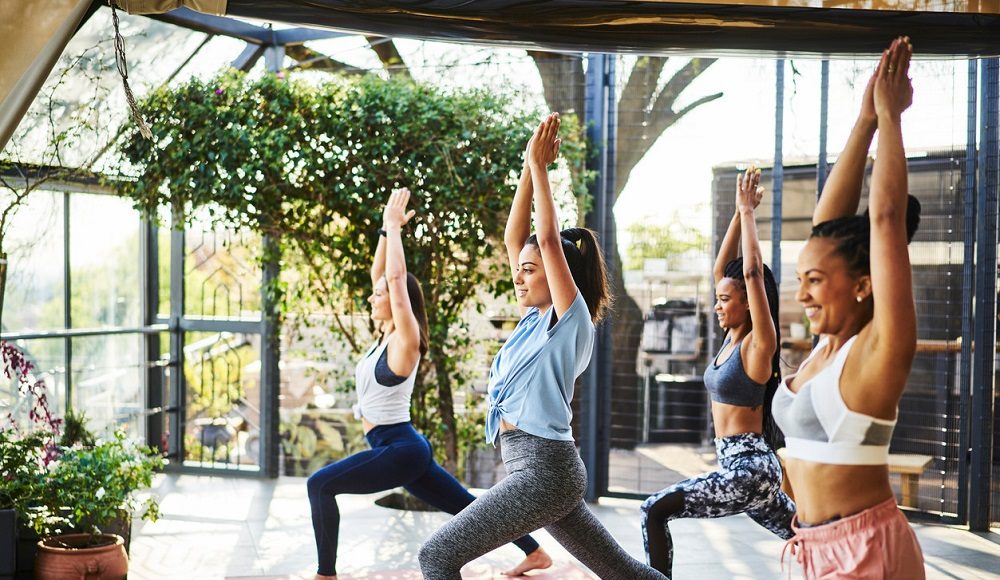
Start in a High Lunge with your right foot forward, back heel lifted, and arms extended overhead. Inhale to prepare, and as you exhale, shift your weight forward into your right foot, launching seamlessly into Warrior III. Pause for a breath in Warrior III, then inhale as you slowly step your back foot back down with control, returning to High Lunge without stumbling. Repeat this controlled transfer five times per leg.
Half Moon Pose (Ardha Chandrasana) Flow
From a standing Triangle Pose with your right foot forward, bend your right knee slightly and place your right fingertips on the floor or a block six inches ahead and to the right of your pinky toe. Inhale as you shift weight onto your right foot and lift your left leg parallel to the floor. Simultaneously rotate your torso and hips open to the left, stacking your left hip over your right, and extend your left arm straight up toward the sky. Hold for several breaths before reversing the movement with control.
Inversions and Head-Below-Heart Poses for Spatial Awareness
Inversions reverse the pull of gravity on the body, forcing the brain to recalculate spatial orientation and rely heavily on internal proprioceptive feedback rather than familiar visual cues.
-
Downward-Facing Dog (Adho Mukha Svanasana): Forms an inverted V-shape, strengthening the shoulder girdle, stretching the calves and hamstrings, and providing a stable foundation for experiencing mild inversion.
-
Dolphin Pose: Practiced on the forearms rather than the hands, Dolphin Pose strengthens the upper back and shoulder stabilizers while conditioning the core for inverted control.
-
Supported Shoulderstand (Sarvangasana): An intermediate inversion that reverses blood flow, demands strong upper back and core stabilization, and deeply challenges spatial perception while keeping the neck protected.
Integrating inversion variations safely into your routine expands spatial comfort, reduces fear of falling, and enhances overall physical composure.
Practical Integration Strategies for Maximum Benefits
To achieve lasting improvements in stability, coordination, and physical confidence, structure your yoga practice around regular, progressive consistency.
-
Practice on Varied Surfaces: Begin practicing balance poses on a firm, flat wooden floor. As your joint stability improves, transition to a cushioned yoga mat or a soft carpet to challenge intrinsic foot stabilizers further.
-
Incorporate Eye Movement Variations: Once you master a balance pose with your eyes open, challenge your vestibular system by closing your eyes or slowly moving your gaze upward toward the ceiling while maintaining the posture.
-
Commit to Brief Daily Sessions: Short, ten-to-fifteen-minute daily sessions focused on balance and core stability produce superior neuromuscular adaptations compared to a single long class completed once a week.
Approaching your physical practice with patience, focus, and playful curiosity creates a resilient, well-coordinated body capable of handling physical demands with complete confidence.
Frequently Asked Questions
How long does it take to see noticeable improvements in balance and coordination through yoga?
With consistent practice three to four times per week, most individuals notice subtle improvements in foot stability, ankle strength, and body control within two to three weeks. Significant improvements in single-leg balance, dynamic coordination, and overall movement confidence typically develop within six to eight weeks.
Can older adults safely use yoga to improve stability and prevent falls?
Yes, yoga is one of the safest and most effective movement modalities for older adults seeking to improve balance. Postures can easily be modified using wall support, chairs, or yoga blocks to ensure complete physical safety while still providing necessary stimulation to retrain joint proprioception and strengthen leg muscles.
Why do I wobble so much when holding single-leg balance poses?
Wobbling, often called ankle chatter, is a completely normal biological mechanism. It indicates that the small stabilizing muscles around your ankles and feet, along with your central nervous system, are actively making rapid micro-adjustments to keep your center of gravity centered over your base of support. Over time, as neural pathways strengthen, the wobbling diminishes.
Is it better to practice balance poses barefoot or with athletic shoes?
Practicing barefoot is strongly recommended for developing true stability and coordination. Barefoot movement allows the sensory nerves on the soles of your feet to make direct contact with the floor, maximizing tactile feedback to the brain while strengthening the intrinsic arches and muscles of the feet that athletic shoes often artificial support.
What should I do if my eyes watering or straining when trying to focus during balance poses?
To avoid eye strain, utilize a soft gaze, known in yoga as drishti. Rather than staring intensely or hard-focusing on an object, rest your vision gently on a fixed spot four to six feet ahead of you on the floor or wall. Allow your peripheral vision to remain soft and relaxed, which lowers physical tension while maintaining spatial orientation.
How does breathing affect physical stability during difficult yoga poses?
Holding your breath creates internal pressure and muscle rigidity, which actually impairs the subtle micro-adjustments required for balance. Slow, deep, rhythmic abdominal breathing stabilizes the diaphragm, lowers the body’s center of gravity, down-regulates sympathetic nervous system tension, and promotes calm, fluid movement control.
Can yoga help rebuild coordination after a minor joint injury like an ankle sprain?
Yes, once acute tissue healing has occurred and a medical provider clears you for activity, yoga is exceptional for post-injury rehabilitation. Injuries damage local proprioceptors in ligaments and tendons; practicing gentle standing balances and joint mobilization poses gradually restores lost spatial awareness and strengthens surrounding stabilizing muscles to prevent re-injury.